


 |


Prostate cancer - Human Health
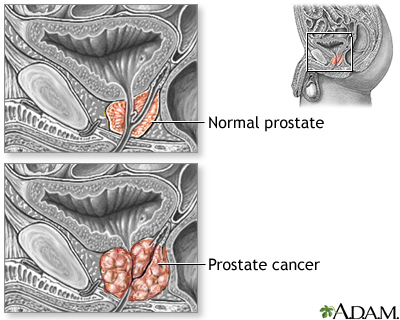
Prostate cancer is a malignant cancer (cancerous) tumor that starts from the prostate cells, the cells usually gland. Typically, prostate cancer grows slowly, but has started to grow and spread quickly in some cases.
By measuring levels of prostate-specific antigen, or PSA, in the blood or by performing a digital rectal exam (dre), the possibility to detect prostate cancer in the early stages of development. Dre During the examination of the prostate gland for bumps or solid mass, which can be identified as tumors.
Common symptoms of prostate cancer that need frequent urination (especially at night), difficulty urinating, or pain and difficulty with the appeal. Other symptoms may include blood in urine or semen. If your doctor suspects prostate cancer, he will tend to do a biopsy to make a diagnosis and, if it is cancer, to determine the stage of disease and how sooner or later may grow and spread.
The most common treatment for prostate cancer may include surgery, radiation and hormone therapy. Chemotherapy can be used in cases of more advanced disease. The most common for prostate cancer surgery is a fairly radical Prostatectomy remove prostate cancer in the cases of the disease is not contagious.
Prevention
objectives prostate cancer prevention strategies is to prevent people from developing the disease. Unfortunately, despite significant progress in research for 16 years, this goal is not reached. Both genetic and environmental risk factors for prostate cancer have been identified, but the evidence was not strong enough to help people now face the risk for prostate cancer.
By contrast, some success has been seen with a strategy that can delay the development and progress of prostate cancer. Studies with finasteride and dutasteride, which is usually used for men with BPH noncancerous conditions, have shown that they can play a role in slowing the development of prostate cancer; ongoing studies will help to determine the optimal role of these agents.
Meanwhile, diet and lifestyle changes have been shown to reduce the risk of prostate cancer development and progress, and can help people with prostate cancer live longer and better life.
Symptoms of Prostate Cancer
If the cancer was caught at an early stage, most people will not experience symptoms. Some men, however, will experience symptoms that may indicate prostate cancer, including:
* Need to urinate frequently, especially at night;
* Difficulty starting urination or holding back urine;
* Weak or interruption of urine flow;
* Pain in urination;
* Difficulty in having an erection;
* Blood in urine or semen, or
* Often mengakami stiffness or pain in the lower back, hips, thighs or above.
Prostate Cancer Treatment
There is no "one size fits all" treatment for prostate cancer, so everyone had to learn as much as he can about various treatment options and, in conjunction with doctors, make their own decisions about what is best for him.
For most people, the decision will rest on a combination of clinical and psychological factors. Men with prostate cancer diagnosis may be translated today will live for many years, so that any decisions made now will reverberate for a long time. Carefully from a variety of important choices is the first step in deciding on the best course of treatment.
Consultation with all three types of prostate cancer specialists-a urologist, a radiation oncologist and medical oncologist, will provide the most comprehensive assessment of the available treatments and expected results.
Posted by Health


